Picture this: you have the ingredients, the counter is clear, and you’re ready to make the recipe you saved. Then, a few steps in, you reach the instruction you wish you’d noticed earlier: refrigerate overnight.
Before opening a package or taking out a pan, give the directions one complete read. You’re looking for the parts that affect when you can actually finish—not just what goes into the bowl.
Look for the waiting
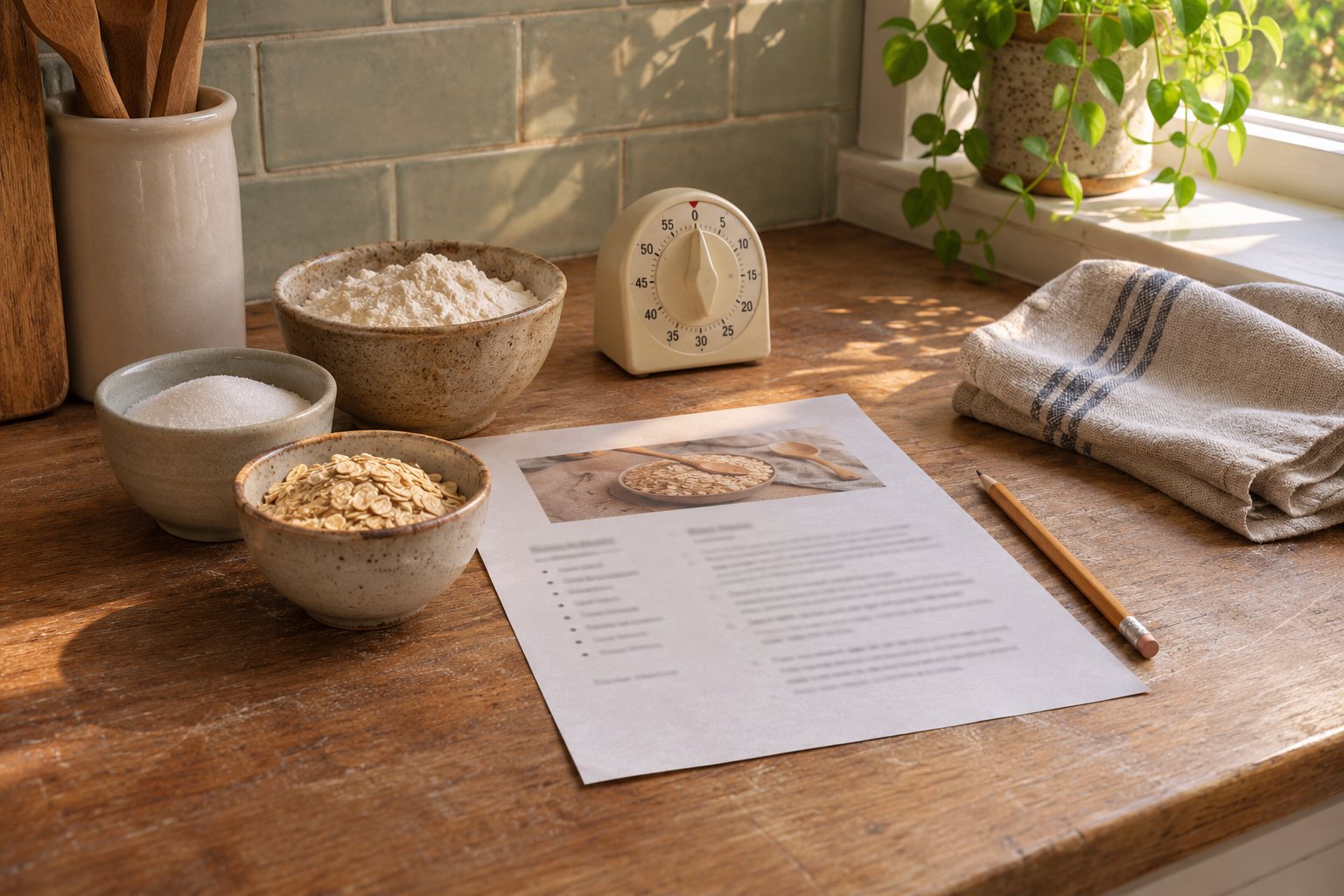
Try marking words such as chill, rest, rise, soak, cool and overnight. For a digital recipe, jot the waits in a short note; on a printout, a pencil mark is enough. You don’t need to rewrite every instruction.
Read around each marked word. Does that step happen before mixing, between two tasks, or after cooking? Is the next task supposed to start only when that wait is over? Follow the recipe’s directions rather than assuming two steps can overlap.
Give the recipe a place in your evening
Here’s a made-up scheduling example: suppose the directions call for 15 minutes of preparation, followed by a two-hour chill, then 20 minutes in the oven. If you want it out of the oven at 7 p.m., those steps point to a 4:25 p.m. start—before allowing for anything else the recipe requires.
Write the start time somewhere you’ll see it. If that time has already passed, choose another recipe or make this one another day. A plan that doesn’t fit tonight can still be useful tomorrow.
Check three things before you begin
- Read from the ingredient list to the final instruction, including any linked preparation steps.
- Note the waits and anything that must already be ready, such as a component prepared in advance.
- Work backward from your serving time, keeping the recipe’s required sequence and storage directions intact.
Keep the note, skip the extra system
If you save the recipe, add a plain reminder next to its title: ‘Start the night before’ or ‘Needs an afternoon at home.’ Use whatever bookmarking or note-taking method you already have.
The goal is simply to know what you’re agreeing to before you start. This isn’t a reason to shorten required waiting, cooking, cooling or storage steps. If the instructions are unclear, find a clearer recipe rather than guessing.