You get home with another bell pepper, open the fridge, and spot the one you bought last time behind a carton. The problem may be less about remembering and more about what you can actually see.
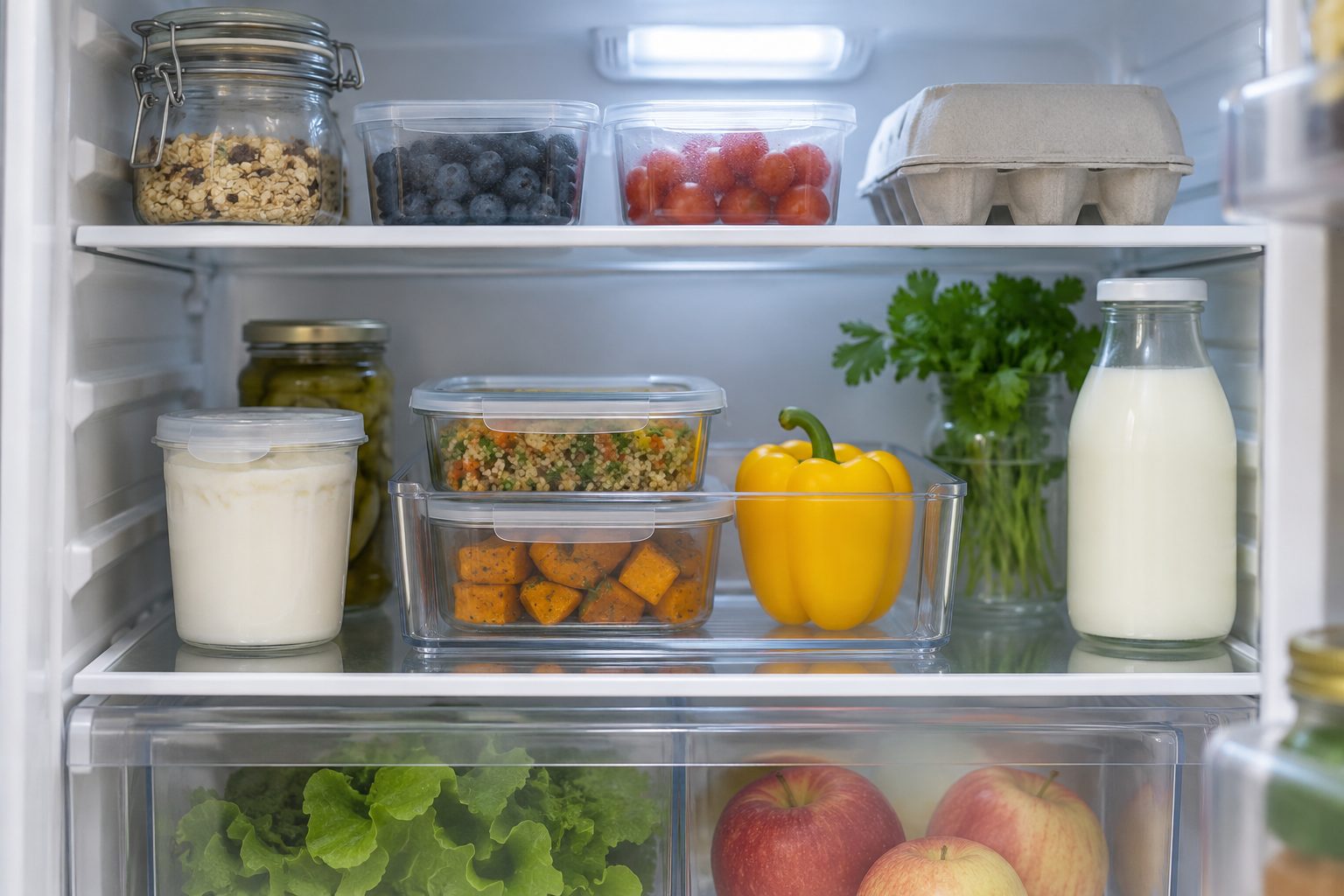
Try giving the ingredients you want to use next one small, visible home. A clean tray, a spare container without its lid, or simply a clear part of a shelf can do the job. It’s an organization suggestion, not a way to make food last longer.
Start with the next meal
Choose two or three suitable items you already plan to use: a covered portion of cooked food, an ingredient opened for yesterday’s dinner, or produce that fits the meal you’re planning. Keep foods in their appropriate packaging and storage conditions. Don’t relocate something just to make the tray look full.
If one person cooks and another shops, agree on what the spot means. ‘Look here before planning dinner’ is more useful than a system only one person understands.
Keep the rule small
- Pick a spot you can see without rearranging the whole shelf.
- Put suitable items there and keep containers covered as appropriate. Add a preparation date to leftovers when you store them.
- Look at that spot before writing your grocery list. Once an item is used, leave the space empty until there’s something else to put there.
Visibility isn’t a safety check
A ‘use first’ area doesn’t reset storage time or make questionable food safe. FoodSafety.gov advises keeping the refrigerator at 40°F or below and refrigerating perishable food promptly. Follow its storage guidance for the particular food, and keep raw meat, poultry and seafood contained separately.
Skip the basket if it gets in your way. The useful part is a shared habit: look at what’s already there before adding more.