The document is open. You know the topic. But after writing a few sentences, you’re still wondering what this assignment is asking you to produce.
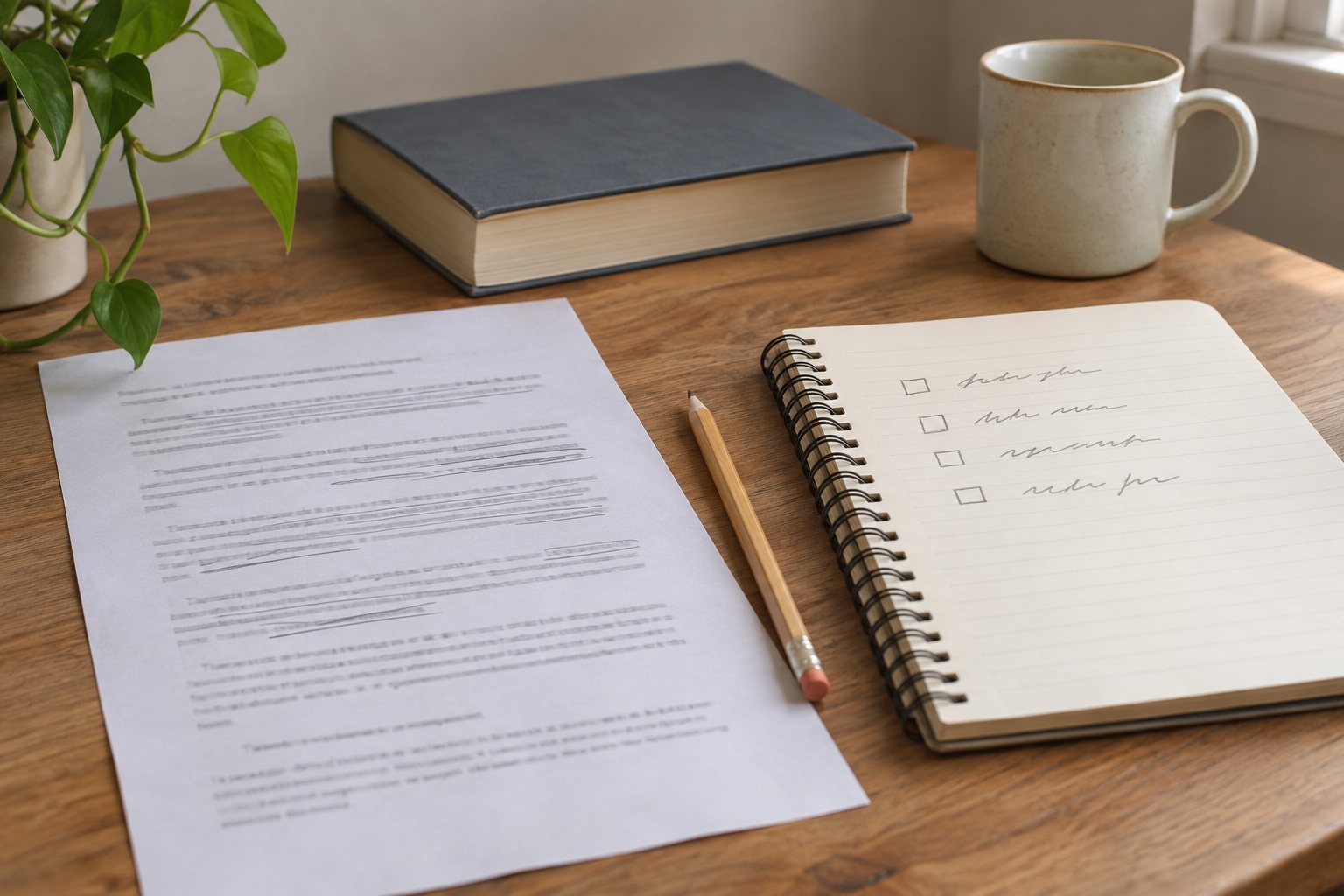
Try going back to the prompt with a pencil. Mark the words that describe the work: compare, explain, evaluate, describe, recommend. Keep the surrounding instructions beside them. Those words are a starting point for a small checklist you can use while drafting.
UNC’s Writing Center advises reading assignments carefully and asking the instructor about anything unclear. The checklist below is an original way to put that advice into practice.
Give each instruction somewhere to land
Here’s a made-up assignment: ‘Compare two proposals for a community garden. Recommend one for a neighborhood with limited space, using evidence from two assigned readings.’ Your own prompt may ask for something quite different.
For this example, a working checklist could look like this:
- Explain what each proposal includes, using the assignment’s criteria.
- Compare the proposals in relation to the neighborhood’s limited space.
- Recommend one and give reasons tied to that comparison.
- Use evidence from both assigned readings and follow the required citation format.
Keep the practical requirements alongside it
Add a separate line for the required length, due date, file type and submission location, if the prompt gives them. Check any rubric or linked instructions too. Don’t invent requirements to fill an empty box.
Use the list to plan the work, rather than treating it as a mandatory paragraph order. An instructor might want a particular structure, or the comparison may work better woven through the discussion. The original directions still decide what belongs in the final piece.
Turn uncertainty into a question
If a word or requirement is unclear, mark that spot instead of guessing. A specific question is easier to discuss: ‘Should I recommend one proposal, or only compare them?’ Include the relevant part of the prompt when you ask.
Before submitting, return to your checklist and point to where the draft addresses each item. A missing item is something to revisit; a checked box doesn’t prove the reasoning is strong or guarantee a grade.
Keep the list on the same page as your draft or in a note you already use. You only need enough structure to see what the assignment asks—and what you still need to do.